


Book Excerpt: Budgeting and Savvy Ways to Save
Today marks week two of my plan to share a chapter each week from my bridal book, Sixteen Steps to “I Do”: A Wedding Planning Roadmap for Joy, Ease, and Savings.
I wrote this book to help brides navigate the practical, emotional, and spiritual aspects of wedding planning. Inside is everything I wish I’d known during my engagement season and on my wedding day.
While these lessons were learned through wedding planning, I’ve often found they apply to life beyond weddings too. The way we approach our finances, priorities, relationships, and expectations tends to shape far more than just a wedding day.
So whether you’re a bride, a friend, a mother of the bride, or simply enjoy following along with the projects and lessons God places on my heart, I hope this chapter offers encouragement and practical value to you or someone you love.
Today, I’m sharing an excerpt from Chapter Two:
Budgeting and Savvy Ways to Save
Enjoy 🤍
Chapter Two: Budgeting and Savvy Ways to Save
“Love knows that whatever you lack in your checking account can be made up by investing time, creative energy, and emotions. We need to know love’s decorating secrets.”
— Sarah Ban Breathnach, Simple Abundance
It doesn’t take long to get swept away by the endless trends, temptations, and TikTok ideas for planning a wedding. That’s why creating a clear budget and defining your priorities early is essential. Think of this as your wedding blueprint. Just as no builder begins a home without first outlining the structure and costs, your wedding deserves the same thoughtful foundation.
From florals to food, every decision can be filtered through this lens. Doing so will help you stay grounded and avoid those “Wait… how much did we spend on flowers??!” moments (Pinterest can be persuasive).
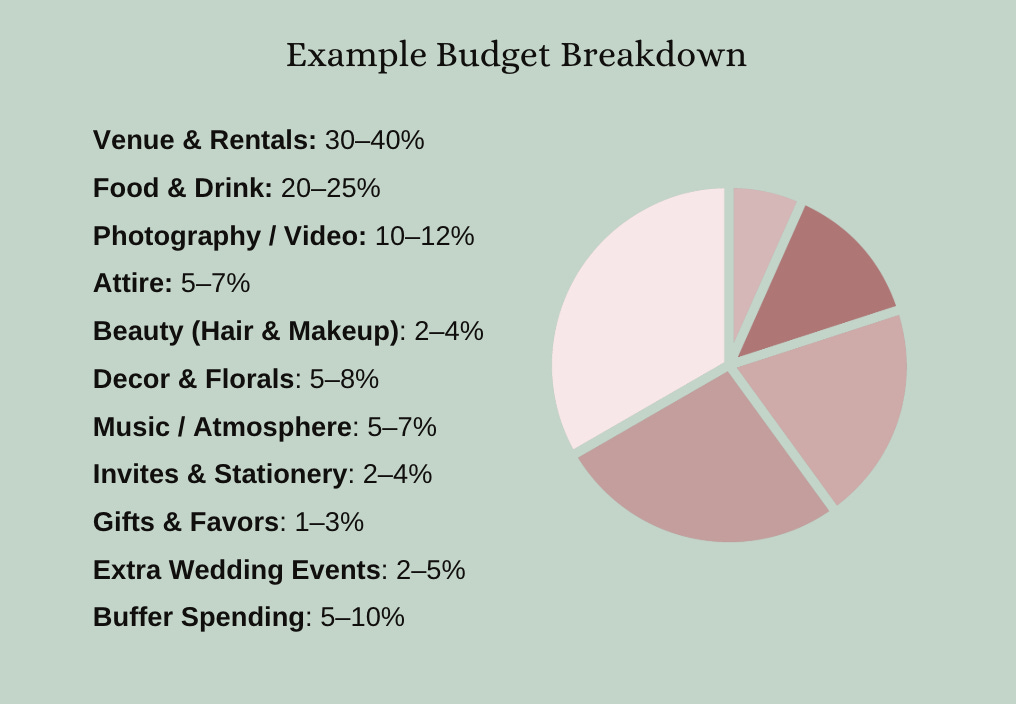
This chart shown below offers an example of a common budget breakdown. Maybe you’re skipping the cake and investing more in florals, or forgoing formal favors to prioritize a live band. Every couple’s budget will look a little different, and that’s exactly as it should be.
AI Support TIp
AI tools like ChatGPT can be very useful for creating a visual of your budget. Try this prompt: “Create a wedding budget pie chart with the categories and amounts I give you,” then send the tool your breakdown.
Savvy Saving
There’s no shortage of budget wedding ideas available online, and this chapter would need an entire book to cover them all. I don't think you're here for every money-saving tip. Instead, I'm highlighting some of the most notable ways to save, particularly where you can reduce costs without sacrificing your vision. My hope is that you'll come away with a deeper perspective and greater peace of mind as you shape your budget and set your priorities.
Venue
When it comes to venues, look beyond the rental price alone. Some bare or industrial spaces might seem affordable at first glance, but the extra décor needed to transform them can add up fast. In contrast, a naturally beautiful venue that has character, greenery, or built-in charm, may require little more than your personal touches. As you tour locations, think not only about how they fit your vision, but how much you must invest to bring that vision to life.
Time & Season
Many venues offer different pricing depending on the season or day of the week. If you’re open to celebrating outside of the peak summer weekends, or even embracing a cozy winter wedding, you might find significant savings without sacrificing beauty.
Alcohol & Beverages
Alcohol is often a significant wedding expense, and expectations can vary depending on culture and location. Before deciding, it’s helpful to understand both the pros and cons.
Pros of an Open Bar
- Guests feel completely “looked after.”
- Everyone enjoys drinks without thinking about cost.
- Bar service might move at a quicker pace.
Cons of an Open Bar
- Guests are typically more liberal with their “orders.” It’s not unusual for someone to take a few sips, set the drink down, and head back for another—each one costing the same to you.
- There’s a greater chance for things to get messy as the night goes on.
- The entire alcohol bill falls on you while the overall guest experience might not improve that much.
A Middle Ground Solution
-
Offer complimentary wine and champagne at the tables. Consider drink tickets—three or four per person is generous and helps control costs. People also tend to treat tickets like money, so they use them more thoughtfully.
-
Choose complimentary alcohol like beer and wine, and cash bar for the rest.
-
A limited time open bar—maybe during cocktail hour or for the first one or two hours.
Flowers and Decor
Flowers can quickly become one of the largest wedding expenses, but choosing blooms that are in season can offer a drastic price decrease. They are usually also more fresh.
To stretch your budget further, consider blending real flowers with high-quality faux florals to add fullness without added expense. Thoughtful use of greenery, candles, or soft fabric can also create a lush, beautiful atmosphere for less.
You can also repurpose your bridesmaids flowers and ceremony flowers into the reception decor.
Suppliers
I explore this topic in greater detail in Step Eight, but it’s worth mentioning here. Social media is a fantastic way to discover wedding vendors. However, the businesses that appear first on Instagram or Google are often those with the largest followings and marketing budgets, allowing them to charge premium prices.
If one of these vendors provides a quote that feels out of reach, don’t assume every professional in that category charges the same. Many highly skilled photographers, florists, planners, and other vendors do very good work without maintaining a large online presence.
Keep an open mind and look beyond the first page of search results. You may discover the perfect fit for both your vision and your budget.
The Wedding Inflation
Unfortunately, when the word wedding is attached to a product or service, the price can sometimes increase significantly. Whether it’s a cake, alterations, or venue décor, you may find yourself paying more without necessarily receiving anything extra.
Savings are often found when you’re willing to think a little outside the box—like choosing a boutique baker, a local seamstress, or even browsing under “party” rentals instead of “wedding” rentals. As you plan, stay open-minded to services that can meet your needs even if they don’t specialize in weddings. If their reviews are strong and their style aligns with yours, they might serve your day just as nicely without the added markup.
DIY (Do It Yourself)
It's no secret DIY projects can save you money. More than that, they can be a special way to add a personal touch to your wedding. It might be a project you're taking on yourself, or maybe you have talented friends and family members offering to help. One of my best friend's moms made homemade jam as wedding favours, and guests adored them. Another mother of the bride brought flowers from her own garden for the ceremony. They looked beautiful.
That said, what looks simple and fun on Pinterest can quickly become overwhelming in real life. While DIY projects can reduce costs, they can also add stress, consume valuable time, and create last-minute pressure during an already busy season.
Carefully weigh the pros and cons. If you feel confident in the project, DIY can be a meaningful way to save money while adding something uniquely personal to your wedding day.
Ways we Personally Saved
Below is a chart showing the ways we personally saved throughout our wedding. While these choices reflected our own values, priorities, and unique circumstances, I hope sharing might open your mind to ways you might choose to save too.

Reflection Questions
-
What’s our ideal budget—and what’s our maximum?
-
What are our top three wedding priorities?
-
What are two or three areas we’re okay simplifying, or even skipping altogether?
-
How do we want the day to feel for our guests—and how can our spending reflect that?
-
Are there any fears or pressures we need to name around money?
-
Is there anything I want to DIY, or ask the people in my circle for help with?
Action Plan
-
Write down your rough budget range—both ideal and maximum.
-
Clarify any potential financial contributions from family or other sources.
-
Identify your top two or three “splurge” areas—where you’ll invest a little more.
-
Identify any nice to haves but “flexible” areas
-
Start a shared spreadsheet (Google Sheets or Excel) to track spending, savings, and ideas together.
Remember, the goal isn’t to have the lowest-cost wedding possible. The goal is to spend intentionally and wisely on what matters most to you as a couple.
Some of the most beautiful weddings aren’t the ones with the largest budgets, but the ones where every decision reflects the couple’s values, priorities, and vision.
I hope this chapter encouraged you and left you feeling more confident in your budgeting choices.
I’ll see you next week for another excerpt from Sixteen Steps to “I Do.”
Xo,
Natalie
Did you find this chapter helpful?
Before the book officially launches, I’d love to share a collection of complimentary resources from the book, including:
• A 12-Month Wedding Planning Timeline
• Final Steps to “I Do” Checklist
• Wedding Day and Marriage prayer
